RJPS Vol No: 15 Issue No: 4 eISSN: pISSN:2249-2208
Dear Authors,
We invite you to watch this comprehensive video guide on the process of submitting your article online. This video will provide you with step-by-step instructions to ensure a smooth and successful submission.
Thank you for your attention and cooperation.
1Mrs. Rashmi Surve, Department of Pharmaceutics, Rani Chennamma College of Pharmacy, Belagavi, Karnataka,India.
2Department of Pharmaceutics, Sree Siddaganga College of Pharmacy, Tumkur, Karnataka, India
3Department of Pharmaceutics, Sree Siddaganga College of Pharmacy, Tumkur, Karnataka, India
4Department of Pharmaceutics, Rani Chennamma College of Pharmacy, Belagavi, Karnataka, India
5Department of Pharmaceutics, Rani Chennamma College of Pharmacy, Belagavi, Karnataka, India
*Corresponding Author:
Mrs. Rashmi Surve, Department of Pharmaceutics, Rani Chennamma College of Pharmacy, Belagavi, Karnataka,India., Email: rashmisurve08@gmail.com
Abstract
Background: Abelmoschus esculentus (Okra) is a widely consumed vegetable known for its nutritional and medicinal properties. Despite its extensive use in traditional medicine, a detailed scientific characterization of its macroscopic, microscopic, physicochemical, and phytochemical properties is essential to validate its quality and therapeutic potential.
Objective: This study aimed to provide a comprehensive analysis of the macroscopic, microscopic, physicochemical, and phytochemical characteristics of Abelmoschus esculentus fruit collected from a local market in Belagavi city, Karnataka, India.
Methods: Fresh Abelmoschus esculentus fruits were collected and authenticated at ICMR-NITM, Belagavi. Macroscopic evaluation involved assessing sensory attributes such as colour, aroma, flavour, and texture. Microscopic analysis included preparing thin cross-sections of the fruit and examining them under a light microscope to observe cellular structures such as epidermis, parenchyma, and vascular bundles. Coarse powder microscopy was also conducted. Physicochemical parameters like moisture content, ash value, and foreign organic matter were determined. Additionally, phytochemical screening of the aqueous extract was performed using standard qualitative tests to detect the presence of secondary metabolites.
Results: Macroscopic evaluation revealed characteristic bright to dark green colour, typical aroma, and elongated fruit morphology. Microscopic analysis verified the presence of well-defined epidermal layers, parenchymatous cells, and vascular bundles. Physicochemical analysis showed low moisture content, minimal ash values, and negligible foreign matter, indicating good quality. Phytochemical screening indicated the presence of carbohydrates, alkaloids, flavonoids, sterols, phenols, terpenoids, glycosides, and proteins, suggesting significant medicinal potential.
Conclusion: The study successfully characterized Abelmoschus esculentus fruit from macroscopic to phyto-chemical levels. These findings support its traditional use and provide a scientific basis for further pharmaco-logical and therapeutic investigations.
Background: Abelmoschus esculentus (Okra) is a widely consumed vegetable known for its nutritional and medicinal properties. Despite its extensive use in traditional medicine, a detailed scientific characterization of its macroscopic, microscopic, physicochemical, and phytochemical properties is essential to validate its quality and therapeutic potential.
Objective: This study aimed to provide a comprehensive analysis of the macroscopic, microscopic, physicochemical, and phytochemical characteristics of Abelmoschus esculentus fruit collected from a local market in Belagavi city, Karnataka, India.
Keywords
Downloads
-
1FullTextPDF
Article
Introduction
Okra (Abelmoschus species) belongs to the Malvaceae family. The genus Abelmoschus originated in Central Africa but is now cultivated throughout tropical and subtropical zones globally. They may be annual herbs, perennial shrubs, or trees, and they characteristically produce a mucilaginous substance. Several types of okra exist, including A.moshatus, A. manihot, A.esculentus, A.tuberculatus, A.ficulneus, A.crinitus, A. angulosus, and A.caillei. This study focused on the species A.esculentus. Notable morphological differences among species include variations in plant size, pod shape, length, and diameter.1
The macroscopic evaluation of A. esculentus involved assessing sensory attributes such as appearance, aroma, flavour, texture, and overallquality of the pods. The microscopic evaluation included examination of the sections of the pods under microscope.2-5
Microanatomy is the study of the microscopic structure of plant cells and tissues. This process typically involves sectioning and staining the samples, followed by observation under a light or electron microscope.1
The microscopic evaluation of A. esculentus, commonly referred to as okra or lady's finger, involves the examination of its internal cellular structures and tissues. Such evaluation is importantin botanical research and quality control, as it provides valuable information about the fruit's anatomy and can be essential for various research and quality control purposes. Photomicrographs taken at various magnifications help in documenting the microscopic structures and cellular details of A. esculentus fruit.5-7
The aim the present study was to investigate the microscopical and morphological characteristics of okra.
Materials and Methods
In this study, okra (A. esculentus L.) samples were collected from a local market in Belagavi city, Karnataka, India. The plant was identified and authenticated by Dr. Harsh V Hegde (Scientist E), ICMR - National Institute of Traditional Medicine (NITM), Belagavi, Karnataka, India.
Sample Preparation
Fresh okra fruits were sourced from the local market and carefully selected to ensure they were free from visible physical defects. The fruits were sliced open using a (FAA) for a duration of 24 hours to preserve cellular structures.4
Powder Microscopy
The coarse powder was treated with routine reagents and examined under the Bioera light microscope (Model: Neosly; Item code: BE/CI/MS/NEOSLY-02) to identify the diagnostic characteristics of the plant.8
The analysis of foreign organic matter, moisture content and ash value in Abelmoschus esculentusfruit is crucial for assessing its quality and nutritional composition. These parameters were assessed and reported in the present study.9-11
Determination of Foreign Organic Matter
An accurately weighed 100g portion of the air-dried coarse drug was spread evenly and examined visually or with a 6x lens. Any foreign organic matter was carefully removed manually and weighed, and its percentage was calculated in relation to the original weight of the drug.

Determination of Moisture Content (Loss on Drying)
An accurately weighed 10 g portion of the coarsely powdered drug was placed in a tarred spray can. The sample was dried at 105 °C for five hours and then weighed every hour until the variation between successive weights did not exceed 0.25%. The loss on drying was calculated as a function of the amount of powder collected.

Determination of Ash Values
Total ash
An accurately weighed 3g sample of the air-dried, coarsely powdered drug was placed in a tarred silica crucible and incinerated in a muffle furnace, maintained at temperatures not higher than 450°C, until complete combustion of organic matter occurred, leaving only ash. The ash value was then calculated as a percentage of the initial weight of the dried sample using the formula:

The ash value of A. esculentus fruit was expressed as a percentage of the dried weight.
Acid-insoluble ash
The total ash obtained from the previous procedure was mixed in 25 mL of 2 M hydrochloric acid and boiled for five minutes using a water bath. The insoluble matter was then collected on an using ashless filter paper, rinsed with hot water, dried, and ignited for 15 minutes at a temperature below 450°C. It was subsequently cooled in a desiccator and weighed. The percentage of acid-insoluble ash was calculated with reference to the air-dried drug using the below formula .

Water-soluble ash
The total ash obtained from the previous procedure (total ash) was mixed in 25 mL of water and boiled for five minutes using a water bath. The insoluble residue was filtered using ashless paper, washed with hot water, dried, and incinerated for 15 minutes at a temperature below 450°C After cooling in a desiccator, it was weighed, and the percentage of acid-insoluble ash was determined relative to the air-dried drug.

Phytochemical Screening
Preparation of aqueous fruit extract of A. esculentus
Fresh okra pods (A. esculentus) were collected from a local market in Karnataka, India. The pods were thoroughly rinsed several times with distilled water to remove dust and other impurities, then air-dried at room temperature for 72 hours. They were subsequently dried at 30-40°C until a constant weight was achieved. The dried pods were ground into a fine powder using an electric blender, passed through a #22 sieve, and stored in an airtight container for later use.10-12
For preparation of aqueous fruit extract, 1 g of the obtained powder was boiled in 200 mL of water for 20 minutes. The extract was then filtered through Whatman No. 1. filter paper, and the resulting filtrate was used for phytochemical screening.10,12
Qualitative tests for identification of phytochemicals present in the extract
Medicinal plants hold immense importance for both individual and communal well-being from a scientific perspective. This significance stems from the presence of specific chemical compounds within these plants, which exert distinct physiological effects on the human body. Aqueous extract of A. esculentus was subjected to qualitative chemical analysis to discern the presence of these key chemical constituents, including flavonoids, alkaloids, carbohydrates, tannins, sterols, phenols, terpenoids, glycosides, saponins, amino acids and proteins, within the extract.13-15
Tests for Flavonoids
Shinoda test: Pieces of magnesium ribbon and concentrated hydrochloric acid were mixed with aqueous fruit extract and boiled for few minutes. Appearance of pink to red colour revealed the presence of flavonoids.
Alkaline reagent test: Two milliliters of 2.0% NaOH solution was mixed with the aqueous crude plant extract, producing an intense yellow colour. Upon adding two drops of diluted acid, the mixture became colourless, indicating the presence of flavonoids.
Lead acetate test: The addition of a few drops of 10% lead acetate solution to the test extract resulted in the formation of a white precipitate, indicating the presence of flavonoids.
Test for acids: To a small quantity of test solution, few drops of concentrated sulfuric acid were added. The appearance of yellow-orange colour indicated the presence of flavonoids.
Tests for Alkaloids
The plant extract was mixed with 1% v/v hydrochloric acid, warmed, and filtered. The filtrate was then used for the following tests.
Mayer's test: Mayer’s reagent (Mercuric chloride + Potassium iodide in water) was used to treat the filtrate. The formation of yellow precipitate indicated the presence of alkaloids.
Dragendorff's test: To test for the presence of alkaloids, a portion of the powdered sample was treated with Dragendorff's reagent. The appearance of an orange red precipitate confirmed the presence of alkaloids.
Wagner's test: A small amount of the extract was treated with Wagner’s reagent, resulting in a reddish-brown precipitate, further indicating the presence of alkaloids.
Tests for Carbohydrates
The plant extract was dissolved in 5 mL of distilled water and filtered. The filtrate was then used to test the presence of carbohydrates.
Molisch's test: Two drops of alcoholic α-naphthol solution were added to the filtrate in a test tube. Concentrated sulfuric acid was then carefully introduced dropwise along the side of the tube using a dropper. At the interface of the two liquid layers, the appearance of a violet colour indicated the presence of carbohydrates.
Fehling's test: The powdered leaf extract was mixed with Fehling’s solutions I and II and heated in a boiling water bath for 30 minutes. The formation of a red precipitate confirmed the presence of free reducing sugars.
Benedict's test: The powdered fruit extract was combined with an equal volume of Benedict’s reagent. A red precipitate developed, indicating the presence of reducing sugars.
Tests for Tannins
Ferric chloride test: A small quantity of the powdered drug was extracted with water. To this aqueous extract, a few drops of ferric chloride solution were added. Bluish black colour was produced, indicating the presence of tannins.
Test for Sterols
The powdered drug was initially extracted with petroleum ether, evaporated to dryness, and the resulting residue was dissolved in chloroform for sterol testing.
Salkowski's test: A few drops of concentrated sulfuric acid were added to the prepared solution, mixed thoroughly, and allowed to stand. The chloroform layer at the bottom turned red, confirming the presence of sterols.
Test for Phenols
The presence of phenolic compounds was assessed using ferric chloride reagent. The appearance of a greenish-black or blue-black colouration confirmed the presence of phenols.
Test for Terpenoids
Two mL of chloroform were mixed with 5 mL of the aqueous fruit extract and evaporated on a water bath. The resulting residue was then boiled with 3 mL of concentrated H₂SO₄. The development of a grey colouration indicated the presence of terpenoids.
Tests for Glycosides
Liebermann's test: Two milliliters of acetic acid were added to 2 mL of chloroform and mixed with aqueous extract. The mixture was cooled, followed by addition of concentrated H2SO4. The development of a green colouration indicated the presence of aglycones, the steroidal part of glycosides.
Keller-Kiliani test: Four milliliters of glacial acetic acid containing one drop of 2% FeCl3, were mixed with 10 mL of the aqueous plant extract. One milliliter of the concentrated H2SO4 was then added. Appearance of a brown ring at the interface confirmed the presence of cardiac steroidal glycosides.
Test for Saponins
Froth test: The plant extract was diluted with distilled water and shaken in a graduated cylinder for 30 seconds. The formation of a 1 cm foam layer indicated the presence of saponins.
Test for Proteins and Amino Acids
Biuret test: A portion of the acidulous alcoholic extract was treated with 1 mL of 10% sodium hydroxide and a drop of dilute copper sulfate. This produced a violet color, confirming the presence of proteins.
Collection and Authentication of A. esculentus Fruit
Abelmoschus esculentus samples were collected from a local market in Belagavi city, Karnataka, India. The plant was identified and authenticated by Dr. Harsh V Hegde (Scientist E), ICMR –NITM, Belagavi, Karnataka, India. A herbarium specimen of the species has been deposited in the institute’s herbarium under accession number RMRC-1752 (Figure 1).
Macroscopic Examination
Organoleptic evaluation is a sensory assessment method used to analyze various sensory characteristics. This evaluation involves the assessment of sensory attributes such as aroma, appearance, flavour, texture, and the overall quality.
Results
The study results of the organoleptic evaluation of A. esculentus fruit, commonly known as okra, is presented below.
Microscopic Studies (Figure 2 )
Transverse section (TS) of A. esculentus fruit
The following reagents were used to examine the section:
. Chloral hydrate solution for clearing agents
. Hydrochloric acid for testing lignin
. Concentrated sulfuric acid for testing calcium oxalate crystals
Quantification
Ground parenchyma cell: 85.91 to 98.17 μm
Mucilage cavity: 85.88 to 97.96 μm
Qualitative microscopic evaluation of A. esculentus fruit provided a detailed understanding of its internal cellular anatomy. The examination revealed characteristic features of the epidermis, parenchyma cells, and vascular bundles.
Epidermis: The epidermal layer of the okra fruit was examined under the microscope. The epidermal, inner epidermal layers, and mucilage cavity were clearly differentiable, as shown in Figure 3. The epidermal cells appeared rectangular to polygonal in shape.
Powder Microscopy
Parenchyma cells: The parenchyma cells in the flesh of the okra fruit were examined. These cells were typically isodiametric with abundant cytoplasm. The presence of cell walls, vacuoles, and intercellular spaces was observed.
Vascular bundles: Vascular bundles responsible for the transport of water and nutrients were identified and were typically arranged in a circular pattern within the fruit. Clear differentiation between xylem and phloem tissues within the vascular bundles was also noted.
Determination of Physico-Chemical Parameters of A. esculentus Fruit
The physico-chemical parameters determined are presented in Table 2. Physicochemical analysis reflects the level of adulteration or handling of the drug. Direct adulteration with sand or soil can be promptly detected through total ash analysis, which typically consists of inorganic compounds such as carbonates, phosphates, silica, and silicates. Consequently, the low values recorded in this study suggest minimal contamination.
Phytochemical Screening of A. esculentus Fruit Extract
The qualitative phytochemical screening of A. esculentus fruit revealed the presence of various phytochemicals as shown in Table 3.
Qualitative chemical assessment of the aqueous extract of A. esculentus (L.) fruit was performed using multiple chemical test procedures. The analysis revealed the presence of an array of secondary metabolites.
Discussion
The macroscopic features of A. esculentus green colour, elongated shape, and mucilaginous texture-are consistent with earlier reports, confirming its distinct morphological identity useful for authentication and quality control. Microscopic observations revealed organized epidermal and parenchymal tissues with vascular bundles, similar to previous studies, validating the internal structure characteristic of okra fruit.
The physicochemical parameters such as low moisture and ash values indicated good-quality, uncontaminated plant material, consistent with WHO guidelines for herbal drugs. These findings align with previously reported studies, suggesting minimal variation attributable to environmental factors.
Phytochemical screening revealed the presence of alkaloids, flavonoids, phenols, sterols, terpenoids, and glycosides-compounds reported by other researchers to exhibit antioxidant, antimicrobial, and wound-healing properties.10,14 The absence of tannins and saponins, in contrast to some earlier reports, may be attributed to differences in geographical origin, or extraction methods.
The presence of flavonoids and phenolics supports the traditional medicinal claims of A. esculentus and highlights its potential for the development of herbal formulations targeting oxidative stress and inflammation related disorders.15
Conclusion
The present study provides a comprehensive pharmacognostic and phytochemical profile of Abelmoschus esculentus fruit, confirming its authenticity, quality, and therapeutic potential. The macroscopic and microscopic evaluations established key diagnostic features, while physicochemical parameters indicated good quality with minimal adulteration. The presence of diverse bioactive phytoconstituents supports its traditional medicinal uses and highlights its potential for further pharmacological investigations and development of herbal formulations. Although the present study was limited to qualitative phytochemical screening, further quantitative and chromatographic analyses (such as High-performance liquid chromatography, Liquid chromatography-mass spectrometry) are needed to confirm and standardize the active constituents.
Conflict of Interest
The authors declare that there are no conflicts of interest.
Acknowledgements
The authors express their gratitude to ICMR and Rani Chennamma College of Pharmacy, both located in Belagavi, Karnataka, for providing assistance and laboratory facilities to conduct the research work.
Supporting File
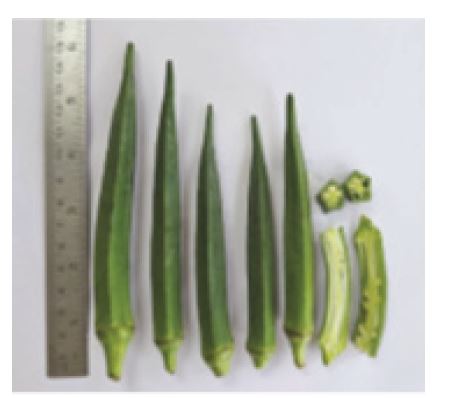
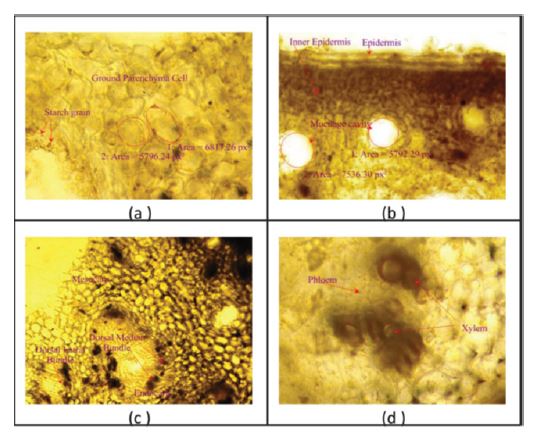 Figure 2: T.S. of fruit showing, (a) Ground parenchyma cell, starch grain; (b) Mucilage cavity, epidermis & inner epidermis layer; (c) Mesocarp, dorsal lateral & dorsal median bundle; (d) Endocarp xylem & phloem" width="200px" src="https://hm-journals.s3.ap-south-1.amazonaws.com/home/journals/2lcI9pSLuKvbIr49ajjaXSclJrfWGDuXhsdoC5vP.jpg">
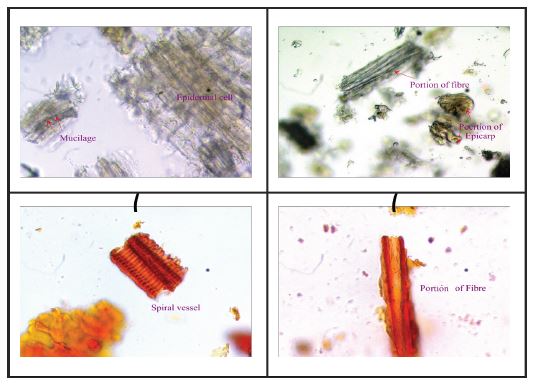 Figure 3: Powder microscopy of fruit showing, (a) Mucilage & epidermis fragment; (b) Portion of fibre & epicarp; (c) Portion of spiral vessel; (d) Portion of fibre" width="200px" src="https://hm-journals.s3.ap-south-1.amazonaws.com/home/journals/PFSO4grpRoYTsAFYsUNDnbFYSpGUsp8Ke08M8cf5.jpg">
References
1. Osawaru ME, Ogwu MC, Emokpare AA. Preliminary assessment of the microanatomy of okra (Abelmoschus (L.) Wood). Egypt Acad J Biol Sci 2014;5(1):39-54.
2. Nanditha H, Suchitra V, Bhasker K, et al. Genetic variability studies in okra [Abelmoschus esculen-tus (L.) Moench] germplasm. Int J Environ Clim 2023;13(10):4202-9.
3. Ogwu MC, OnosigbereOhwo U, Osawaru ME. Morphological characterization of okra (Abel-moschus [Medik.]) accessions. Makara J Sci 2018;22(2):81-8.
4. Tambare P, Tamboli FA, More HN. Standardization of herbal drugs: an overview. Int Res J Pharm 2021;12(2):56-60.
5. Samim S, Sood S, Singh A, et al. Morphological characterization of okra [Abelmoschus esculentus (L.) Moench]. Int J Curr Microbiol Appl Sci 2018;7(10):2011-9.
6. Inamdar JA, Rao TR, Dave Y. Histological structure of the pericarp of Abelmoschus esculentus (L.) Moench in relation to growth and dehiscence. Proc Plant Sci 1989;99(6):547-56.
7. Tripathi KK, Warrier R, Govila OP, et al. Ministry of Environment and Forests, Government of India. New Delhi: Ministry of Environment and Forests; 2011.
8. Bharthi V, Reddy P, Shantha TR, et al. Phytochemical evaluation and powder microscopy of medicinal and nutritional fruits of Physalis peruviana L. Int J Herb Med 2016;4(1):43-6.
9. Khan S, Rafi Z, Baker A, et al. Phytochemical screening, nutritional value, antidiabetic, anticancer, and antibacterial assessment of aqueous extract from Abelmoschus esculentus pods. Processes 2022;10(2):183.
10. Singh SP, Sharma KD. Microstructural, nutritional and storage evaluation of okra powder. Pharma Inn-ov J 2022;11(21):342-52.
11. AOAC. Official methods of analysis. 19th ed. Gaithersburg (MD): AOAC International; 2012.
12. Reine BG, Houndékon BA, Marcelline GN, et al. Phytochemical composition and antioxidant capacity of Abelmoschus esculentus L. fresh immature fruits. Am J Food Sci Technol 2018;6(5):223-7.
13. Onakpa MM. Ethnomedicinal, phytochemical and pharmacological profile of genus Abelmoschus. Phytopharmacology 2013;4(3):648–63.
14. Yee TT, Lwin K. Phytochemical investigation on the fruits of Abelmoschus esculentus (L.) Moench. Iconic Res Eng J 2019;3(2):43-8.
15. Patil SG, Wagh AS, Pawara RC, et al. Standard tools for evaluation of herbal drugs: an overview. Pharma Innov J 2013;2(9):60-5.